In the world of luxury hospitality, from grand hotels to exclusive resorts, finding the right talent is the cornerstone of crafting unforgettable guest experiences. The industry demands professionals who seamlessly blend expertise with genuine warmth, anticipating needs before they arise. The need for such assets is highest now than ever before. The hospitality industry in India and South Asia is set for significant expansion over the next five years. Hyatt Hotels Corporation plans to open 100 hotels in India by 2029, with seven new properties launching in 2025 across cities like Ghaziabad, Kasauli, Kochi, Bhopal, Vithalapur, Jaipur, and Butwal (Nepal). Similarly, Indian Hotels Company Limited (IHCL) has unveiled its Gateway brand, aiming for 100 hotels by 2030. Other major players like Hilton and Lemon Tree Hotels are also expanding aggressively, with Hilton targeting a luxury surge and Lemon Tree signing new properties in Rajasthan and Maharashtra. Just a few weeks ago, Marriott International Inc. announced the agreement for a 160-room JW Marriott Ludhiana. The Indian MICE market itself is expected to touch $103.7billion by 2030.

Four Seasons, Maldives
The scenario is a welcome change from the dark pandemic period, where the hospitality industry was the hardest hit. Characterized by its reliance on human interaction and international travel, this industry faced unprecedented challenges that reshaped the lives of its employees. According to the World Travel & Tourism Council, the hospitality sector lost billions in 2020 alone, resulting in the furlough or permanent layoff of millions of workers worldwide. Frontline workers such as housekeeping staff, receptionists, and servers were particularly vulnerable, as their roles were directly tied to customer presence.

Four Seasons, Maldives
We spoke with four prominent members, from different sectors of the luxury hospitality industry, for their views and insights on various topics.
– Kuldip Verma, former senior Vice President ITDC, current founder & CEO of VAVA Tourism & Hospitality Solutions (P) Ltd
– Didier Jardin, General Manager, Four Seasons Resorts Maldives at Kuda Huraa
– Rohit Sharma, Former Marketing Director at JW Marriott New Delhi, current Founder CEO of Brand Abstract. He had helmed the launch of The Lalit London, managing PR and Communications for 13 five-star hotels for the Group.
– Puspendu Sain, former ITC Maurya, New Delhi, The Ritz-Carlton, Pune, Six Senses Fort Barwara, Rajasthan, handpicked to join Hyatt Ziva & Zilara, Jamaica under Playa Hotels and Resorts, currently Asst Director F&B Jewel Grande, Montego Bay Resort & Spa, Jamaica
Where are all those trained workforce now that it is boom-time in the hotel industry? Why are they reluctant to come back?
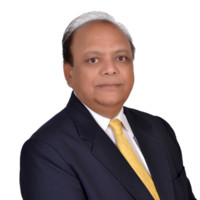
Kuldip Verma, Founder & CEO of VAVA Tourism & Hospitality Solutions (P) Ltd
Kuldip Verma – Hospitality professionals are drawn to other Service Sector organisations where working conditions, pay package & accelerated promotional opportunities are by far greater than a placement in a hotel. In star hotels, a new entrant must toil for long hours, the stipend or wages are lower and not at par with other professions. The employees have to wait for longer periods for their next promotion. There is an element of uncertainty for career advancement.
What measures are being taken to address this situation?
Kuldip Verma added, “There is an urgent need of educated, trained and skilled manpower for hotel operational areas like the Front-Office, Food & Beverage Service, Food Production and Housekeeping to meet their manpower needs. Prominent Indian hotel groups like the Taj Group (IHCL), ITC Welcome Group, The Oberois (EIH) etc. do run in-house training facilities to partially meet their manpower needs. Govt. of India’s National Council of Hotel Management & Catering Technology (NCHMCT) run 32 IHMs all over India, however, do not attract sufficient number of candidates to fill up the offered seats through JEE admission process.”
How difficult is it to train and retain the staff at a luxury property like Four Seasons Kuda Hura? Is the attrition rate high?

Didier Jardin, General Manager, Four Seasons Resorts Maldives at Kuda Huraa
Didier Jardin – Retaining great people begins with caring for them—not just professionally, but personally. I work closely with our leadership team to ensure that training and staff development remain central to everything we do. In today’s climate—with so many new luxury properties opening across Asia—it’s more important than ever to create an environment where people feel valued, supported, and inspired to grow.
Training at Kuda Huraa is a continuous journey. Together with our department heads and managers, we’ve built a robust learning culture that begins from the very first day an employee joins us. We provide ongoing development in areas like emotional intelligence, guest empathy, and anticipatory service. Through Embark, our Four Seasons orientation programme, new team members are introduced to our service philosophy and values.
Why do younger generations seem less inclined to seek careers in the hospitality industry?
Rohit Sharma – Younger generations today are exploring a wider variety of career choices, many influenced by digital innovation and entrepreneurial trends. In some cases, hospitality’s traditional image needs to be better communicated to highlight the incredible career paths it offers—not just in operations, but across marketing, experience design, sustainability, and technology integration. With evolving brand cultures, emphasis on well-being, and new-age roles emerging within hotels, I believe hospitality is well-positioned to attract and nurture the aspirations of today’s youth.
What role do global mobility and immigration play in addressing or exacerbating the talent gaps?
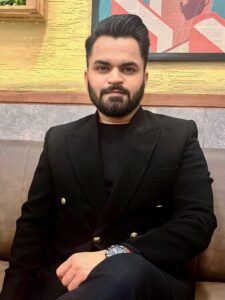
Rohit Sharma, Founder CEO of Brand Abstract
Rohit Sharma – Global mobility has always been a cornerstone of the hospitality industry’s vibrancy and adaptability. The ability for professionals to move across markets, gain cross-cultural exposure, and bring back global best practices enriches the entire ecosystem. At the same time, balanced policies and strong local development initiatives are essential to ensure that opportunities continue to be created and nurtured within domestic markets as well. In today’s interconnected world, global mobility is less a challenge and more an opportunity—allowing hospitality brands to create diverse, future-ready teams who can deliver exceptional guest experiences anywhere in the world.
Didier Jardin – Alongside our senior leaders, I make it a point to mentor emerging talent and encourage internal mobility. Whether someone wants to rise within their current department or explore new areas of business, we work hard to make those opportunities available. Cross-exposure programs—both within the Maldives and at other Four Seasons properties—are just one of the ways we support long-term career growth.
Many of our team members have been with us for years, even decades, and I truly believe that’s a reflection of the culture we’ve built together. Our success comes from a shared commitment—from every manager, trainer, and colleague—to creating a workplace that people are proud to be part of. At the end of the day, we’re only as strong as our team. My role is to support and guide, but it’s the collective effort of everyone at Kuda Huraa that makes it possible for us to deliver the kind of service our guests return for, time and time again.

Four Seasons, Maldives
What impact has working in the hospitality industry, particularly a high end 5 star hotel like ITC Maurya, had on your personal and professional growth?

Puspendu Sain, Asst Director F&B, Jewel Grande, Montego Bay Resort & Spa, Jamaica
Puspendu Sain – Working as a Butlers Executive at ITC Maurya, New Delhi, India has been one of the most transformative experiences in my personal and professional journey. Serving globally renowned dignitaries such as President Barack Obama, the Dalai Lama, and Olympian Michael Phelps, Cricketing legend Sachin Tendulkar not only honed my hospitality skills but also elevated my standards of excellence, discretion, and cultural sensitivity. Each interaction demanded the highest level of professionalism, adaptability, and attention to detail. I learned to anticipate needs before they were expressed, communicate with poise under pressure, and uphold the essence of luxury service — all while representing a globally respected brand. The exposure to international guests and protocols has given me a global outlook and the confidence to build experiences that exceed expectations, no matter what the audience.
Can you share a particularly moving or memorable guest interaction?
Puspendu Sain – Olympian Micheal Phelps, during his stay at ITC Maurya, after a long day of press engagements requested something simple — a bowl of Indian lentil soup (dal) and some jasmine rice. As I served him in his suite, he looked up and smiled, “You know, I’ve eaten in a hundred places around the world, but something about this food—it feels grounding.”
Curious, I asked, “Is there something about India that feels different?”
He leaned back, thoughtful. “Yeah,” he said, “I think it’s the stillness. I’ve always been moving — training, racing, and chasing gold. But here, I’ve found a kind of peace. Even in the chaos, there’s balance. You ever feel that way?”
I smiled and said, “Yes sir, we call it ‘shanti’ — peace that doesn’t come from silence, but from presence.” He nodded slowly, genuinely moved. “That’s what I’ve been looking for. Not more medals — just presence.”
That conversation stayed with me. It reminded me that even the most accomplished people in the world are searching for the same thing we all are — peace, authenticity, and a moment to feel human. It was a quiet reminder that service isn’t just about delivering food or amenities — it’s about creating a space where someone can pause and just be.

Four Seasons, Kuda Hura, Maldives